Five thoughts, ideas, insights, or quotes to power up your mind to think differently and creatively about life and who we are. Put all previous thinking away and open up a brand new world of the Supermind. YOUR SuperMind.
This week – Capitalism.
Since the 1950’s Capitalism has been the means by which most societies function and run. This is where private operators create and manufacture products, goods, and services that are then offered for sale in free markets with the price eventually decided by supply and demand. After World War 2 it was seen as the shiny new concept that would guarantee a better standard of living for all and greater financial freedom for the majority.
Yet, here we are a matter of only a few decades later and millions around the world are suffering from this very same system that was meant to alter their life for the better. And that means SuperMind Saturday has to turn its thinking onto the subject.
1. Who has really won?
Capitalism sold itself as the way everyday people could improve their life. If they ‘bought’ into the system – produce, purchase, profit, produce more, purchase more and so on – they, and all of us, would end up winners. But the end result today is more everyday working people and families in debt and struggling. Winners once have become losers now despite following the capitalistic way. Which leads us to the stark question that must be faced.
Who has really won from Capitalism? And who will keep winning if we continue to follow it?
2. Capital end game.
The design of any system is to achieve a goal. Some goals are included in the overall plan. They are part of the structure of the system so that the overall targeted result occurs more efficiently or readily. So, bear that in mind whenever you are told about ‘the system’ you may get involved with or brought into. Now, let’s look at capitalism. Yes, it’s about a wider range of production that is freely available. This is part of the structure as mentioned above. But what is the end game? Where is it all leading?
Is Capitalism merely for the few to have more capital? Is that its real end game?
3. Done to debt?
There is a well known phrase which says, credit where credit is due. In real terms this means credit given to those that have worked and earnt it. But in finance circles it has become credit where credit is available. This change in ready made credit has been what has driven all of the extensive consuming in the last few decades. But that credit for those who have less earnt it has only added to spiralling debt as people purchase to keep up with others (I have looked at debt separately in SuperMind Saturday). Truth is we’ve been done to death financially and become drowned in debt.
Has Capitalism just been an excuse to increase debt? And who do we all owe to and pulls the strings?
4. Technological threats.
We are all well aware of the growing use of technology. Technology has been expanding in almost every area of our lives. It’s promoted as being helpful to us; giving us more time away from tasks and duties so that we can live more and enjoy it. But……if technology is replacing what we did, it means we don’t do it anymore. And those tasks we don’t do are jobs and employment. From technology to AI, what people did high-tech is taking over from humans. Capitalism is funding and leading this. Less people to pay and support, less administration and costs. What does that REALLY lead to? More profits and even more money!
Has technology become the reverse threat to us under Capitalism?
5. What ‘Ism’ would work?
Capitalism has been the widest ‘ism’ in use for modern life. It has taken over the others that existed at various times in history and in various parts of the world. There has been socialism where everything is in collective ownership and puts social welfare for all as the priority rather than private profits for some. Of course there has been communism too. This promotes a classless state with common ownership (usually by rulers) and resources distributed to meet need. Plus, at the other end of the spectrum we’ve seen fascism and idealism to name but two. But, we are in a mess and need something soon before it all collapses. To the end…
What ‘Ism’ should we now adopt? What hasn’t been tried or what new idea could there be?
Ok, that’s another SuperMind Saturday done. Thank you for being here for the SuperMind time. Keep thinking about these. We need more minds thinking about this issue and the others issue on SuperMind Saturdays. Why? Because it’s needed. Because the world requires new thoughts and ideas. Perhaps YOURS!!
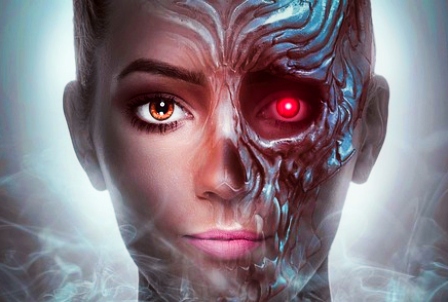
It’s a prediction that’s been made for a few decades. From the film screen to book pages and even art nowadays, robots will replace us. Replace and take over if you believe such omens as shown in The Terminator and I-Robot.
Whether you believe that forecast or not, one thing is for sure, robots are increasingly more active in our lives.
And with the advent of Artificial Intelligence, in the very near future the human mind is going to be more obsolete in use.
Well, that’s another prediction. But, we are already robotic in one way mentally.
You, me, pretty much everyone of us.
We all are robots in our mind so read on to find out how…and why!
Personally Programmed.
Robots, like computers, are programmed.
They have an operating system that runs software that contains their orders, the programme that defines their actions, which they stick to. We have developed the technology to programme robots to make, build, and manufacture and to make themselves in effect with robots creating robotic machines.
The robot simply follows the loaded programme instructions.
And that’s where we come in and turn into robots.
Our operating system is our mind. The one that runs our life with it’s physical brain loaded in our body to carry out the mental instructions. But, where does the mind get those instructions? Who sets the programme?
Well….we do.
Over our many years of life we continually gather a massive range of beliefs, views, information, insights, perceptions and (hopefully for most of us), wisdom. Now some of these come from direct experience – mistakes, regrets, successes, discipline, effort etc. But added to these are another whole range of outer influences – how we were raised, our environment, authority figures from teachers to family and more, from society, from the media, and , increasingly, from social media and the internet. We are easily influenced creatures.
We bank all of this mix mentally and it forms a type of rule book on how to approach life, behave, and be who we are. Like a recipe in a cookbook except ours is a lifebook.
Therefore, unlike robots, we are personally programmed. No other human carries the same programme inside them. Ours are unique to each of us and the mind, like the robot, obeys these rules and guidelines on life formed from what we put in there.
But that’s where it goes wrong.
Not because we are robots out of control, but BECAUASE we are human!
The Robot Mind.
Our robot minds get to work as soon as we wake up.
The moment our eyes open after sleep and our awareness kicks in, the mind also begins switching on. As it does so it flicks into operating mode and all those background beliefs and views etc that we hold (both bad and good) start to run the show.
When we get up and begin to move, the mind is immediately being powered by that underlying software. Our mind, effectively, is on automatic like an airplane on auto pilot. In fact that analogy is perhaps the most accurate way of explaining it. The captain has control and can override the pre-set auto pilot but often he doesn’t and let’s it do its job.
And guess what happens? The plane ends up where it has been programmed to be. Just like us.
Which is why we seem to lurch from one same issue to another.
We are pre-set to live, act, think etc in our mind that same way like a robot honouring its guidance system. Pre-set and pre-ordered by everything we hold in our mental file about ourselves and life. Our mind is our robot counterpart. The trouble is we aren’t aware that we are cerebral cyborgs who can change how we operate.
We contend that it’s fate or bad luck that keeps leading us down wrong roads and finding wrong people on the way.
If you take a look you will see how you repeatedly think and react like a robot.
A always equal B say in relationships or X never fails to lead to Y in your finances. Work and career may start at point A but are never meant to progress passed point B. In short, you’ve decided most of your destiny in advance and programmed yourself like a robot to follow it through to the decided result.
Even if you SO believe you haven’t. YOU HAVE!
You are continually completing your programme. The one that kicks in as soon as the alarm goes off. The one that runs unconsciously on your behalf so that you barely notice how it’s conducting your life.
So, ask yourself when you get up what your expectations are for the day? What do you believe will happen to YOU? What money or love or even life itself will continue to deal you as a hand?
The robot in your mind has those answers and is directing you in every moment based on them. The ones you put in there in the first place. You need to re-write them by reconsidering what you believe about you and life. That will re-write your own self programming and update your mental instruction guide for life.
It’s time to be more human and less robot. To think and reflect and update what that person sees and believes. And to then upload the updated view (software) into your mind so a new life can be initiated. Or a new destination input in your life auto-pilot.
Robots may begin to take over the world, but don’t let yours take over your mind.
That is the common belief. That success comes from being incredibly clever, highly talented, and immensely creative. Or you must be truly innovative, an ahead of the curve inventor, or plain genius.
In other words success comes from special people doing or forming something special. Special, ground breaking, or through some life long dedication that finally bore fruit decades later.
This may sound familiar (unless you are a young TikToker or YouTuber who believes it can all come overnight viral style).
But, it’s a myth.
True success is equally likely, if not more expected, from those who stick to the extra simple others have never ever considered.
Because simple often turns out to be superb!
Small but successful.
The very best ideas often stem from basic need.
Someone has a problem so sets up something simple to help that ends us being very lucrative.
It’s 2005 and British student Alex Tew was trying to find a way to help fund his studies. He was beginning a 3 year business management course at the University of Nottingham. Concerned that after graduating his student loan repayments would cripple his finances for a good many years to come, he needed to create some ongoing income. One evening while looking at a computer screen and seeing the many pixels in its resolution, he had a brainwave.
He decided to set up a simple basic homepage with a million pixels and sell each pixel to businesses for $1 each (he chose US Dollars as there were far more business organisations in the States). For their $1 the business could add their logo and a hyperlink so when a viewer to the site hovered over it they could click into that organisations website.
With set up costs of only $50 the site went live in August 2005. Word of mouth soon spread and Tew decided to send out a press release when he made his first $1000 which the BBC picked up followed by technology site The Register. Within a month sales were over $250,000, and by New Year’s Eve 1,000,000 pixels had been sold.
From one simple idea looking at a tiny dot on a computer screen.
Scramble for Success.
Scrambling eggs was one on the first cooking skills we learnt in the past.
A simple task our parents taught us to help us start to make our own food. But, that simplicity seems to have disappeared.
On YouTube today over 17 million people have viewed a simple video on how to scramble eggs. Add to that nearly 6 million have watched a video on how to change a flat tyre on a car. And 3 million needed a video to be able to change a lightbulb.
Surrounded by every type of technology available, the modern mind is incapable of everything simple.
And that is where all the amazing opportunities exist in the world. We can’t do simple, so we seek out those who can or those that see the simple and turn it into something we need, want, or crave. And the simplest of all…is play.
When Joan Anderson went back to her native Australia in the late 1950’s she saw young children playing with wooden hoops made from left over barrels they spun round their waist. It reminded her of Hula girls from Hawaii and decided to make a version and called it the Hula Hoop. She thought it could be a perfect toy for kids everyone could afford. She took the idea back to the USA and used plastic instead of wood to keep costs low and for safety and to make them lightweight and easy to use.
The product flew off the shelves and in America alone it sold in excess of 25 million hoops in the first two months with sales of over $45 million. To this day they are still on sale and as of 2023 more than 21 million hoops were still being sold each year.
One massively lucrative product developed by one simple case of watching children play.
It’s all simple, and it’s all out there!
Simply Look.
The best ideas respond to our lives.
They match what we need, what makes our life less difficult, or support how we live. Try and find someone who would walk your dogs, look after your garden, clean your house, or do your ironing twenty years ago and you’d be hard pushed.
As life changes all manner of ideas for services and products spring up to match that change. It has always been this way. With life now fast changing at a pace even MORE ideas will be required as society evolves in this technological age.
With a growing reliance on technology we have taken our eye off simplicity even though we will never replace its presence in our lives. Which is why millions want to know how to scramble eggs or pump up a tyre or even how to find the trip switch after a power cut**.
If you keep your eyes open everywhere you go, in the end simple will leap out at you.
The glaring gaps that haven’t been filled by an idea or concept because we’re moving so fast no-one else has spotted it. It won’t happen overnight but slowly and surely, what’s missing will appear. What most people don’t have that you have worked out you can create or offer.
Spotted it in the size of a dot on a computer screen or children playing with makeshift plaything.
Make the shift yourself, look for simple and simple may bring you major success!
**1.4 million watched a video on YouTube to able to do this!
Or that new film that’s breaking records…or that hit record that’s breaking records?
You know the type; the book or product or quick fire hit that is on everyone’s lips. There is always something that the crowd are talking about, raving about, or excited about.
Why? Is it that good? Or perhaps the best ever?
No, probably not even close. It’s all been a flash fire ignited by hype. An overreactive response that has turned into a runaway train. A reaction that has picked up so much speed it’s hard to avoid it now.
What caused this suddent craziness?
The beauty and power of persuasion!
The False Fear Effect.
Almost everyone has heard of FOMO.
The modern day acronym that stands for Fear Of Missing Out. The social media coined term that says if you’re not out doing cool stuff or with cool people or in cool places, you’ll be a nobody. So don’t get FOMO, get busy.
But, of course it was all fake. It was just a clever persuasion trick to encourage users to be so active they will post more and improve the profile and reach of the social media platform.
Like all persuasion, it spread. You had to be ‘in’ with the latest and most hip or you are insignificant. Which in turn has led to the development of the Somebody Syndrome. All of which isn’t real in any way, shape, or form.
It’s pure persuasion at work.
We buy into the buzz, don’t want to be left out, want to show others we’re not a loser or left behind, and so we get involved too. It’s simple ancient tribal survival behaviour in modern form. Everyone is hunting and eating sabre tooth tigers, hell you betta too or you’ll be left out of the tribe and have to fend for yourself. A false fear appearing real.
Which is why you watch the show or buy the album ‘everyone’ is talking about. You want to ensure you’re not the outsider. It’s just now others might laugh at you, cut you out of conversations, or not invite you to nights out rather than exile you out into the valley among the Pterodactyls.
You are determined not to end up out in the cold on your own.
More ostracised than dinosaur sized these days.
Every day is persuasion day.
Persuasion is like air. It’s everywhere all the time.
The average person sees some 5,000 ads every day in various forms. Companies, marketers, promoters, shops and traders, well, almost anyone today online and offline subtly assault your senses daily to grab your attention.
Grab your attention so they can grab your business, your money, your data, your desire for more and so on. Once grabbed you can be persuaded in a myriad of ways to sign up, create a profile, refer a friend, tell others about your experience, or qualify for more special offers and deals.
The art of persuasion is alive and thriving as well as it ever has been. It’s big business and a veritable science these days with click funnels and ‘Buy Now’ buttons and tailor made personal opportunities or limited time reductions and bonuses.
And why does it work? Because, we are easily persuaded!
We are human so what hooks in our interest and emotion tends to get our curiosity and support. Most notably speeches work best. Take Winston Churchill’s nation rousing ‘We Will Fight Them on The Beaches‘ speech to the British public in 1940. Or Martin Luther King’s ‘I Have a Dream‘ rallying cry for civil rights in 1963.
When we are engaged, and emotive, and stirred, we can be, and always have been, persuaded.
History of Persuasion.
We have a history with persuasion.
As far back as 1864 glossy ads first appeared in Harpers Magazine though the first known advertisement was 18 years earlier in the Imperial Intelligencer. We have been mass persuaded every since.
Persuaded to look younger, have beautiful hair, feed our dog the finest food, book a holiday, see the supermarket bargains, and to buy cars, computers, and phones.
If I shouted ‘Whazzup’ or ‘Just Do It’ specific products and companies come to mind. I bet you know a few! That’s the art of persuasion. It hooks us in. Just ask used car salesmen in their heyday almost compelling you to spend thousands more on the latest model when you came only to look at a cheaper used one.
And it doesn’t just stop there – political campaigns, sexual allure, bosses getting workers to complete projects, securing charity donations, and helping other people, all succeed due to the power of persuasion.
Subtle or direct, sexy or inviting, persuasion is our human weak spot.
Unlock your power.
We all use it, we all try it.
Persuasion is an art we’ve all developed. You fancy an early night for some loving time with your partner. Bring on the fresh flowers, some sweet slow kisses, add a few treats like chocolates, and go for the burn with some romantic whispers in her ear. Your are in persuasion mode.
What do you do ladies to persuade your man to buy you something or take you out?
Girl or guy, who didn’t try to twist one of their parents round their little finger to get what they wanted as a kid?
Truth is, we all persuade, we are all persuaded.
It’s a given in life. The real key is by reading this you might see it at work and start to use its power as leverage for yourself. To deliberately employ its hypnotic charms to achieve bigger goals. Don’t waste it on the little stuff. Make it matter.
Use persuasion to begin stepping up. To win the promotion, get your break where you so want it, to get a deal on a new home or for your business. Persuasion is where potential becomes possibility becomes reality. Make it on your side from now on.
Are you persuaded now ?
Reference – Jumbla.com – The Psychology of Persuasive Ads.
Those awesome ideas for a product or business, book or song?
We tend to think that they appear only in the great minds of the talented and super smart, the genius brained few. And that means that they’re unlikely to ever come our way. Hey, our minds just do boring stuff like our job, household tasks, and trying to work out the plot of the big TV drama.
Well, stop right there. Because that big TV drama could be about to lead you to the idea that you have long waited for.
But, to take advantage of it, you have to keep switched on as one man famously did.
Banking on a surprise.
Everyone needs a break, even the most creative among us.
That’s what a songwriter was doing one night in 1970 when he turned on the TV after a long day of musical work. As he began to relax he started paying to attention to the ads popping up on the TV during a break from the film he was watching.
He then heard something that set lightbulbs flashing off in his mind.
A seemingly non-descript advert for Crocker-Citizens National Bank in California featured a young couple getting married and needing financial help to support their new journey together. As the couple appeared on screen the lines of a background tune was heard, ‘We’ve only just begun to live…’
The songwriter was transfixed. He loved it and immediately believed he could turn it into a successful song for his group. His group of himself and his sister. His sister Karen Carpenter and himself, Richard Carpenter.
Acquiring rights to rework the whole song The Carpenters released it as a single in August 1970. It shot to No.2 in the US Billboard Charts and won the Carpenters siblings a Grammy. All from a TV ad. But when a mind is ready and open, anything can spark the most amazing ideas.
After all, we’re there’s one, there could be another!
Say Hello to Ideas.
After one unusually inspired song, lightning couldn’t strike twice….could it?
Guess who was watching another TV film one night? Now, this was because he liked movies, not because he expected to hit gold again with an idea like the last one. That said, his mind was already ready and prepared for potential ideas.
It was 1971 and Richard Carpenter noticed a Bing Crosby movie was showing on TV called Rhythm on The River while visiting London. In the movie in which Crosby played a ghost songwriter for Basil Rathbone’s character, they constantly referred to a song he was trying to write called ‘Goodbye to Love’, though it was never heard on screen.
The title got right into Richard’s head and soon he was off forming a melody and opening lyrics. Working with lyricist John Bettis they turned those 3 words into a fully fledged love song.
Another blockbuster had been born.
It hit No.7 in the Billboard chart and remained in the top 10 for months. It even became the song that was recognised as the first ever so called ‘power ballad’ whose style countless artists would also copy and record in the decades ahead.
One man with a mind ready for ideas from anywhere that produced mega success.
Ideas are everywhere.
Have you ever had an idea for a trip or big night out?
Maybe it was something different or way out or even plain crazy.
You didn’t question yourself whether you were intelligent enough or a recognised smart thinker to think it up. You simply had the idea, saw it in your mind, and then went ahead and worked it.
That’s what ideas are. They are everywhere for everyone.
They are not ‘for some’, they are ‘for all’. Age, gender, background, education etc mean NOTHING. Once you can allow yourself to accept this, you can start noticing all the ideas that have been hitting your head for years. The ones you persuaded yourself were silly because they were for a new business or gap in the marker product.
Key of all is that your mind remains receptive. Like Richard Carpenter watching TV ads or an artist walking outside or a business guru who sits in coffee shops and watches the world. Receptive minds see opportunity and possibility where others see nothing. From how people walk to too long a queue in a shop, these minds can craft something successful from it.
And their greatest advantage – they HEAR what people really say, they actively pick up the need or want behind their words and conversations. They gather great info on what people are missing or requiring or need help with.
This is how ideas leap at youwhen you are prepared for them.
There is gold in every day people.
Gold is not a nugget in the ground.
Gold is found in the world around us if we slowed our minds down and began observing. I’ve always said that observing leads to obviously serving people what makes their life better.
Being less focused on the slow traffic snarl up you’re stuck in and more on the scene and people around you is the magic most people are missing. Your partner is running late and you are standing outside the shops presents a massive window on how others move and act if you keep looking. Forget your phone and social media, let your mind have an idea as it watches and inform you.
In short, when you take any situation and set your mind to look around, listen, and simply take in what’s in front of you for a while, you will become an ideas factory.
A kind of prospector of gold out in the world.
As those of us that have already started watching for the amazing ideas, there’s plenty to come because…
We’ve only just begun to live!
References – Wikipedia – We’ve Only Just Begun.
Parade.com – the 1972 Carpenter’s song owes roots to Bing Crosby movie